
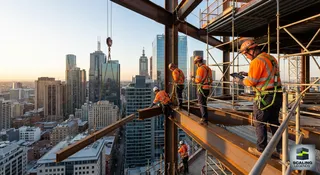
Imagine this: A seemingly routine day on your jobsite is interrupted by the flashing lights of an official vehicle. An OSHA inspector steps out, clipboard in hand, and informs your superintendent that they’re there for a comprehensive, unannounced inspection. This scenario, already a reality for many, is about to become significantly more frequent and intense. In fact, projections from industry analysts suggest that by Q4 2025, OSHA inspection rates could surge by as much as 25% year-over-year, setting the stage for what many are calling the “OSHA 2026 Crackdown.” The question isn’t if you’ll be ready, but how prepared your business will be when the spotlight inevitably turns to your operations.
The Big Picture: Why This Matters Now More Than Ever
For decades, OSHA has been a critical regulatory body, ensuring safer workplaces across America. But the landscape is shifting. We’re on the cusp of a significant recalibration in enforcement, driven by several converging factors: a renewed federal commitment to worker safety, increasing public scrutiny of workplace accidents, and a statistical uptick in certain construction-related fatalities and serious injuries. This isn’t just a tweak; it’s a strategic pivot towards a more aggressive, proactive enforcement stance that will directly impact every contractor, from the small residential builder to the large commercial developer.
The “OSHA 2026 Crackdown” isn’t an arbitrary date; it marks the culmination of policy reviews, increased funding allocations, and a clear directive from the top: compliance is non-negotiable, and the cost of non-compliance is about to escalate dramatically. This shift is less about punishing contractors and more about incentivizing a fundamental change in safety culture across the industry. OSHA aims to move beyond reactive incident response to proactive hazard prevention, and they’re arming themselves with the resources to make that happen.
What does this mean for your business? It means that relying on minimal compliance or hoping you fly under the radar is no longer a viable strategy. Your safety program, your training protocols, your equipment maintenance, and even your subcontractor agreements will all face heightened scrutiny. Failure to adapt will not only expose your company to significantly higher fines and potential legal action but could also severely damage your reputation, impact your ability to bid on projects, and ultimately, threaten your bottom line. Smart contractors aren’t waiting for the crackdown; they’re already transforming their safety frameworks into competitive advantages.
“The construction industry has always operated in a high-risk environment. But the impending OSHA 2026 shift isn’t just about managing risk; it’s about embedding safety as a core operational value. Those who embrace this early will not only protect their workers but also future-proof their businesses,” says Sarah Chen, lead analyst at Smart Business Automator (SBA), a leading market intelligence firm for the construction sector.
Actionable Step This Week: Conduct an internal “temperature check” of your current safety culture. Talk to your superintendents, foremen, and field workers. Ask them candidly about perceived safety gaps, near-miss reporting efficacy, and their confidence in your current safety protocols. This qualitative data is invaluable for identifying immediate areas for improvement.
The Data: What the Numbers Show and Why They Demand Attention
The writing is already on the wall, etched in statistics and projections that paint a clear picture of what’s coming. Understanding these numbers isn’t just academic; it’s essential for strategic planning. The data points to a future where safety is no longer a sideline concern but a central pillar of operational excellence.
-
Increased Inspection Volume: As mentioned, expert analysis, including insights from Smart Business Automator (SBA), indicates a projected 25% increase in OSHA inspections by the end of 2025, escalating further into 2026. This translates to an estimated 7,500 to 8,750 additional inspections annually across all industries, with construction being a primary target due to its inherent risks. This isn’t just random; it will be driven by data analytics identifying high-risk sectors and specific types of work.
-
Soaring Penalty Amounts: Prepare for a significant hike in monetary penalties. While OSHA already adjusts penalties annually for inflation, the 2026 crackdown is expected to introduce a more aggressive penalty structure, potentially increasing average fines by 20-30%. For instance, a serious violation, currently capped at $16,559 per violation, could easily jump to over $20,000. Willful or repeated violations, which currently carry a maximum of $165,560, could exceed $200,000 per violation. Imagine multiple violations on a single site, and you quickly see the financial peril.
Targeted Violations: OSHA isn’t just casting a wider net; they’re also sharpening their focus. The perennial “Fatal Four” in construction—falls, struck-by, caught-in/between, and electrocutions—will remain high priorities. However, expect increased scrutiny on specific areas that consistently lead to injuries and fatalities. Based on recent trends and proposed regulatory updates, here are the top 5 most cited violations, and what their potential penalty ranges could look like under the new regime:
-
Fall Protection (General Requirements): Consistently the #1 cited violation. Expect fines ranging from $15,000 to $25,000 for serious violations, and $150,000 to $250,000 for willful or repeated offenses.
-
Hazard Communication: Often overlooked, but critical for chemical safety. Fines could range from $10,000 to $18,000 for serious violations.
-
Scaffolding: Improper construction, use, or fall protection on scaffolds. Serious violations could incur $12,000 to $20,000, with willful violations hitting $120,000 to $200,000.
-
Lockout/Tagout: Controlling hazardous energy during maintenance. Serious violations could cost $14,000 to $22,000.
-
Trenching and Excavation: Lack of protective systems, improper access/egress, or unsafe spoil pile placement. These often lead to fatalities and carry severe penalties, potentially $20,000 to $30,000 for serious violations, and $200,000 to $300,000 for willful violations due to the high risk.
-
Indirect Costs Skyrocketing: Beyond direct fines, the indirect costs of an incident are staggering. Industry estimates suggest that indirect costs can be 3 to 5 times higher than direct costs. These include lost productivity, administrative costs, legal fees, damaged equipment, increased insurance premiums, reputational damage, and the immeasurable cost of low employee morale. A single serious incident could easily cost your company hundreds of thousands, if not millions, of dollars.
-
Worker’s Comp Premiums: Expect your Experience Modification Rate (EMR) to become an even more critical metric. A higher EMR due to incidents will directly translate to significantly higher worker’s compensation premiums, impacting your bid competitiveness and overall profitability.
The numbers speak for themselves: the investment in proactive safety measures is a fraction of the potential costs of non-compliance. A $10,000 investment in a comprehensive safety training program could prevent a single incident that might otherwise cost your business $100,000 in fines and indirect expenses.
Actionable Step This Week: Review your company’s incident history from the last three years. Identify the most common types of incidents, the associated direct and indirect costs, and map these against the “target violations” identified above. This will help you pinpoint your highest-risk areas and prioritize your safety investments.
Practical Strategies: What Smart Contractors Are Doing to Get Ahead
While the data might seem daunting, it also presents a clear roadmap for action. Smart contractors aren’t just reacting; they’re strategically positioning themselves to thrive in this new regulatory environment. They understand that a robust safety program isn’t merely a compliance burden but a strategic asset that enhances efficiency, reduces costs, and builds a stronger reputation.
1. Developing a Robust Safety Management System (SMS)
Beyond a binder of policies, an SMS is a dynamic, integrated system for managing safety risks. It involves:
-
Clear Policies & Procedures: Regularly updated, easily accessible, and understood by all.
-
Defined Responsibilities: Everyone, from CEO to entry-level worker, knows their role in safety.
-
Hazard Identification & Control: Proactive processes for identifying, assessing, and mitigating risks before work begins.
-
Incident Investigation & Analysis: Not just reporting, but deep dives into root causes to prevent recurrence.
-
Continuous Improvement: Regularly reviewing and improving the SMS based on performance data and feedback.
Many leading contractors are now ISO 45001 certified or working towards it, recognizing that internationally recognized standards build a resilient safety framework.
2. Investing in Advanced Training & Competency Development
OSHA 10 and 30 are baselines, not end-points. Smart contractors are going further:
-
Specialized Training: Tailored training for specific high-risk tasks (e.g., confined space entry, advanced rigging, excavation competent person training).
-
Refresher Courses: Annual or bi-annual refreshers to ensure knowledge retention and update on new best practices.
-
Leadership Training: Equipping superintendents and foremen with the skills to lead safety initiatives, conduct effective toolbox talks, and enforce safety rules consistently.
-
Certification Programs: Encouraging and funding certifications for key personnel in areas like first aid, CPR, aerial lift operation, and fall protection competent person.
Consider bringing in third-party safety consultants for specialized training that your internal team might not have the expertise to deliver.
3. Implementing Regular Site Audits & Mock Inspections
Don’t wait for OSHA to find your deficiencies. Proactive self-assessment is key:
-
Scheduled & Unannounced Audits: Conduct regular, documented safety audits of all active jobsites. Vary the schedule and approach to keep teams vigilant.
-
“Mock OSHA” Inspections: Periodically bring in an external safety consultant to conduct a full-scale mock OSHA inspection. This provides invaluable practice for your team in documentation, communication, and response, identifying weaknesses before a real inspector does.
-
Peer Reviews: Have project managers or safety officers from different projects audit each other’s sites to bring fresh eyes to potential hazards.
4. Cultivating a Culture of Safety from the Top Down
Safety is not a department; it’s everyone’s responsibility, starting with leadership:
-
Visible Leadership Commitment: CEOs and senior managers regularly visit jobsites, actively participate in safety meetings, and visibly champion safety initiatives.
-
Employee Empowerment: Encourage all workers to identify hazards, stop unsafe work, and report near misses without fear of reprisal. Reward proactive safety behaviors.
-
Open Communication: Establish clear channels for safety concerns, feedback, and suggestions from all levels of the organization.
-
Integration into Performance Reviews: Incorporate safety performance as a metric in employee evaluations, particularly for supervisory roles.
5. Rigorous Subcontractor Vetting and Management
Your subcontractors’ safety performance is often seen as an extension of your own:
-
Pre-Qualification: Implement a robust pre-qualification process that includes reviewing subcontractors’ EMR, OSHA history, safety programs, and training records.
-
Contractual Obligations: Ensure your contracts explicitly define safety expectations, compliance requirements, and consequences for non-compliance.
-
Site Integration: Integrate subcontractors into your safety program through orientation, shared safety meetings, and joint hazard analyses.
-
Performance Monitoring: Regularly monitor subcontractor safety performance on your sites and hold them accountable for any deviations.
Actionable Step This Week: Schedule a dedicated “Safety Strategy Session” with your leadership team (superintendents, project managers, safety officers). Dedicate at least two hours to discuss current safety challenges, brainstorm proactive solutions, and assign ownership for specific initiatives outlined above. This sends a strong message that safety is a top priority.
Tools & Technology: Leveraging Innovation for Unmatched Safety
The construction industry, historically slow to adopt technology, is now seeing a rapid acceleration in safety-focused innovation. The OSHA 2026 crackdown provides an even stronger impetus to embrace these tools, transforming safety from a manual, reactive process into a data-driven, predictive, and integrated system. Investing in the right technology isn’t just about compliance; it’s about operational efficiency, risk reduction, and ultimately, saving lives.
1. Safety Management Software (SMS Platforms)
These comprehensive platforms are the backbone of modern safety programs. They centralize and automate critical safety functions:
-
Incident Management: Streamlined reporting, investigation, and analysis of incidents, near misses, and observations. Track root causes and corrective actions.
-
Training & Certification Tracking: Manage employee training records, certifications, and expiration dates, ensuring everyone is qualified for their tasks.
-
Document Management: Centralized storage for Safety Data Sheets (SDS), permits, policies, and procedures, accessible from any device.
-
Audit & Inspection Checklists: Digital checklists for site inspections, equipment checks, and compliance audits, often with photo/video capture capabilities.
-
Permit-to-Work Systems: Digital workflows for high-risk activities, ensuring all necessary approvals and precautions are in place.
Leading platforms like Procore, HCSS Safety, or Safesite offer robust features tailored for construction, providing real-time insights and reducing administrative burden. The data collected by these systems is invaluable for demonstrating due diligence to OSHA and identifying trends for continuous improvement.
2. Wearable Technology for Real-time Hazard Detection
Wearables are moving beyond fitness trackers to provide critical safety functions:
-
Fall Detection: Devices that automatically detect a fall and alert emergency contacts or supervisors, significantly reducing response times.
-
Proximity Sensors: Warn workers when they are too close to heavy machinery or moving equipment, preventing struck-by incidents.
-
Environmental Monitoring: Sensors that track exposure to hazardous gases, extreme temperatures, noise levels, or UV radiation, protecting workers in challenging environments.
-
Heart Rate & Fatigue Monitors: While still evolving, some devices can monitor vital signs to detect heat stress or fatigue, especially for workers in demanding conditions.
These devices provide an extra layer of protection, particularly for lone workers or those in high-risk zones, offering immediate alerts that can be life-saving.
3. Drones & Robotics for Site Monitoring and Inspection
Unmanned aerial vehicles (UAVs) and ground robots are revolutionizing hazard identification:
-
High-Altitude Inspections: Drones can safely inspect elevated structures, roofs, and hard-to-reach areas, identifying fall hazards, structural integrity issues, or unsafe conditions without putting workers at risk.
-
Progress Monitoring & Safety Audits: Regular drone flights can capture comprehensive site imagery, allowing safety managers to review progress and identify potential safety violations or changes in site conditions from a safe distance.
-
Confined Space & Hazardous Area Inspection: Small robots can enter confined spaces or areas with hazardous materials to conduct inspections, eliminating the need for human entry in dangerous situations.
The visual data from drones provides irrefutable evidence for safety compliance and can be used for training, incident investigation, and communication with stakeholders.
4. Artificial Intelligence (AI) & Machine Learning (ML) for Predictive Safety
This is where safety moves from reactive to truly proactive:
-
Predictive Analytics: AI algorithms can analyze vast amounts of data (incident reports, near misses, weather patterns, project schedules, training records) to identify patterns and predict areas or tasks with the highest risk of incidents.
-
Behavioral Safety Analysis: AI-powered video analytics can monitor jobsite activities, flagging unsafe behaviors or conditions in real-time for intervention.
-
Risk Scoring: ML models can assign risk scores to different projects, tasks, or even individual workers based on historical data, allowing resources to be allocated more effectively.
While still emerging, AI promises to transform safety by enabling contractors to anticipate and prevent incidents before they occur, optimizing resource allocation, and focusing efforts where they are most needed.
5. Virtual Reality (VR) & Augmented Reality (AR) for Immersive Training
Traditional classroom training has limitations. VR/AR offers a game-changing alternative:
-
Realistic Hazard Simulation: VR allows workers to experience and react to realistic hazard scenarios (e.g., falls, trench collapses, electrical hazards) in a safe, controlled virtual environment.
-
Equipment Operation Training: Trainees can practice operating heavy machinery or complex tools in a virtual setting, reducing the risk of accidents during initial hands-on training.
-
Procedure Walkthroughs: AR can overlay digital safety instructions or equipment schematics onto the real world, guiding workers through complex procedures step-by-step, ensuring compliance and reducing errors.
These immersive technologies enhance retention, improve decision-making skills under pressure, and provide a cost-effective way to train for high-risk situations without actual exposure.
The integration of these technologies into your operations isn’t just a luxury; it’s becoming a necessity. As OSHA sharpens its focus and penalties rise, companies that leverage technology will be better equipped to demonstrate compliance, manage risks, and maintain a superior safety record.
Actionable Step This Week: Research and identify one specific safety technology (e.g., a safety management software, a specific wearable device, or a VR training module) that addresses a known pain point or high-risk area in your operations. Schedule a demo with a vendor or assign a team member to conduct a pilot program. Start small, but start now.
How to Prepare Your Business for the 2026 OSHA Shift
The impending OSHA 2026 crackdown is not a threat to be feared, but a call to strategic action. By implementing a proactive, multi-faceted approach, you can transform potential compliance challenges into a competitive advantage. Here’s a 7-step plan to ensure your business is not just ready, but leading the pack.
Conduct a Comprehensive Compliance Audit: Specific Instructions: Hire a third-party safety consultant specializing in construction to perform a thorough, unbiased audit of all your current safety programs, policies, and jobsite practices. This audit should cover everything from your written safety plan and training records to equipment inspection logs and incident reports. The consultant should identify gaps between your current state and anticipated 2026 OSHA expectations, providing a detailed report with actionable recommendations. This is your baseline, your “before” picture, and it’s critical to identify all weak points.
Elevate Your Safety Training Programs: Specific Instructions: Go beyond minimum requirements. Develop a tiered training strategy:
-
Entry-Level: Ensure all new hires complete OSHA 10-hour training before setting foot on a jobsite.
-
Supervisory: Mandate OSHA 30-hour training for all foremen, superintendents, and project managers.
-
Specialized: Identify high-risk tasks specific to your operations (e.g., trenching, confined space, fall protection, crane operation) and enroll relevant personnel in advanced, task-specific certifications.
-
Ongoing: Implement a mandatory weekly toolbox talk schedule, focusing on pertinent jobsite hazards, and conduct quarterly safety refreshers for all staff. Document every session, attendee, and topic discussed meticulously.
Invest in Proactive Safety Technology: Specific Instructions: Allocate budget for safety technology. Begin by implementing a robust Safety Management Software (SMS) platform to centralize incident reporting, training records, SDS management, and digital checklists. Explore pilot programs for wearable tech (e.g., fall detection devices) or drone inspections for high-risk areas. Consult market intelligence from sources like Smart Business Automator (SBA) to identify leading solutions tailored for the construction industry and assess their ROI. This digital infrastructure will be crucial for demonstrating compliance and proactive risk management.
Reinforce Your Safety Culture from the Top Down: Specific Instructions: Implement a “Safety First” mandate from the CEO down.
-
Leadership Engagement: Ensure senior management regularly visits jobsites, participates in safety meetings, and visibly champions safety initiatives.
-
Employee Empowerment: Institute a “stop work authority” for all employees, empowering them to halt work they deem unsafe without fear of reprisal.
-
Near Miss Reporting: Promote a culture where near misses are celebrated as learning opportunities, not failures. Implement an anonymous reporting system to encourage honesty and identify systemic issues before they become incidents.
-
Recognition Programs: Create a recognition program for outstanding safety performance and proactive hazard identification.
Review and Update Subcontractor Agreements: Specific Instructions: Work with your legal counsel to revise all subcontractor agreements. Include explicit clauses that:
-
Require subcontractors to adhere to your company’s safety program and all OSHA regulations.
-
Mandate proof of adequate insurance and worker’s compensation coverage.
-
Stipulate the right to audit their safety programs and remove personnel who violate safety rules.
-
Define shared responsibilities for site-specific safety planning and hazard communication.
Establish a rigorous pre-qualification process that includes reviewing their EMR, OSHA citation history, and safety training records.
Develop a Rapid Response Plan for Inspections: Specific Instructions: Don’t be caught off guard. Create a detailed “OSHA Inspection Playbook”:
-
Designated Representative: Appoint and train a specific individual (e.g., Safety Manager, Project Manager) at each jobsite to be the sole point of contact for an OSHA inspector.
-
Documentation Hub: Ensure all critical safety documents (safety plan, training records, permits, equipment logs, SDS) are organized, up-to-date, and readily accessible, ideally digitally through your SMS.
-
Legal Counsel: Establish a relationship with an attorney specializing in OSHA defense and know who to call immediately if an inspector arrives.
-
Employee Briefing: Train all employees on their rights during an inspection and the appropriate way to respond to questions (e.g., answer truthfully, but do not volunteer information beyond what is asked).
Conduct a mock inspection drill with your team to practice this plan.
Stay Informed and Adapt Continuously: Specific Instructions: The regulatory landscape is dynamic. Assign a dedicated person to monitor OSHA updates, proposed rule changes, and enforcement trends. Subscribe to industry newsletters, attend webinars, and leverage market intelligence from sources like SBA. Regularly review your safety program (at least annually) and adapt it based on new regulations, industry best practices, and your own incident data. Continuous improvement is not just a buzzword; it’s a necessity for sustained compliance and safety excellence.
Frequently Asked Questions About the OSHA 2026 Crackdown
What are the biggest changes expected in OSHA enforcement?
The primary shifts will be significantly increased inspection rates (projected 25% surge), higher penalty amounts (20-30% increase for many violations), and a more aggressive focus on proactive hazard identification rather than reactive incident response. OSHA aims to make compliance more economically compelling than non-compliance, pushing contractors towards robust safety management systems and advanced training.
How much more will penalties cost under the new regime?
While exact figures will be released, expect serious violations to jump from around $16,500 to over $20,000, and willful or repeated violations to exceed $200,000, up from roughly $165,000. These are per violation, meaning multiple findings on a single site can quickly accumulate into hundreds of thousands of dollars, excluding indirect costs like legal fees and reputation damage.
Should I hire a full-time safety manager for my construction company?
For many scaling contractors, absolutely. If your company has multiple projects, a significant number of employees, or engages in high-risk work, a dedicated safety manager is becoming indispensable. They can ensure continuous compliance, manage training, conduct audits, and develop a robust safety culture, ultimately saving your business far more than their salary in avoided fines and incidents.
What if I’m a small contractor with limited resources? Does this still apply?
Yes, the crackdown applies to all contractors, regardless of size. While OSHA may historically focus on larger sites, increased enforcement means smaller operations are also at higher risk. Small contractors must prioritize core safety measures, utilize affordable digital tools, and consider shared safety resources or external consultants to ensure compliance without breaking the bank.
How can technology truly help with OSHA compliance?
Technology centralizes and automates safety processes, moving from reactive to proactive. Safety management software tracks incidents, training, and audits, while wearables detect real-time hazards. Drones inspect dangerous areas, and VR/AR offers immersive training. These tools provide data-driven insights, reduce human error, and create an auditable trail, making it easier to demonstrate due diligence to OSHA and prevent incidents.
The Bottom Line
The OSHA 2026 crackdown is not a distant threat; it’s a strategic inflection point for the construction industry. The businesses that will not only survive but thrive are those that recognize this shift as an opportunity to elevate their safety standards, embrace innovation, and embed a culture of safety into every fiber of their operations. This isn’t just about avoiding fines; it’s about protecting your most valuable asset—your people—and building a more resilient, reputable, and profitable business for the long haul.
Don’t wait for the inspector’s knock. Start preparing today. Your future self, your team, and your bottom line will thank you.
For more in-depth analysis, expert interviews, and actionable strategies to navigate the evolving construction landscape, make sure you’re subscribed to the Scaling Legends podcast. We bring you the insights you need to lead your business into tomorrow.